InvestiGenie, a FinTech platform using Monte Carlo rebalancing and a RAG chatbot to deliver personalized insights, enhance advisor communication, and surface real-time investor trend data.
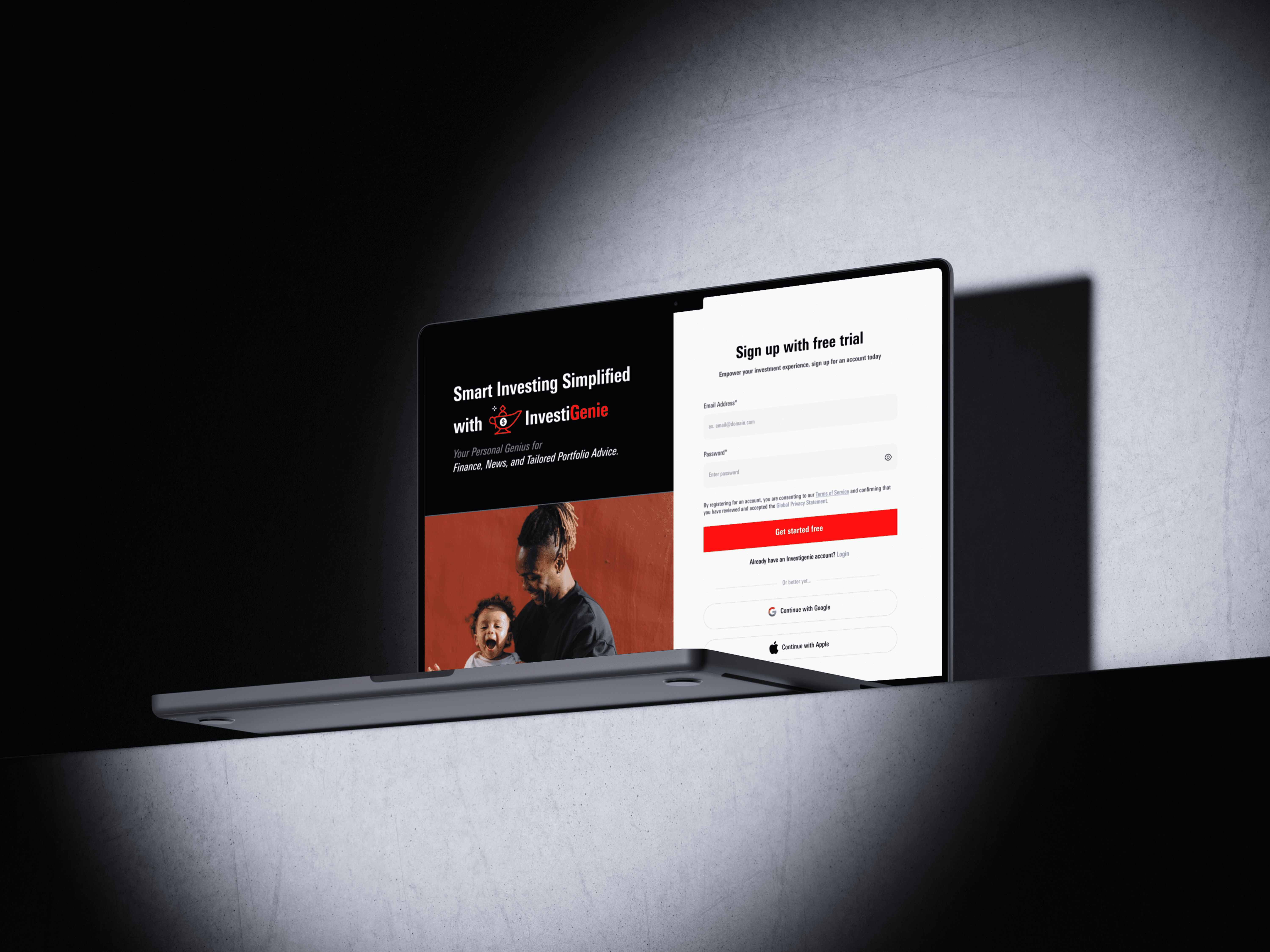
Retail investing is changing... New investors are younger, skeptical of traditional advice, and expect tools that adapt to 'them' - not the other way around. At the same time, financial advisors struggle to personalize conversations at scale while keeping trust intact.
Where Existing Investment Tools Break Down
Most investment tools surface sophisticated analysis without helping users understand what it means at the moment decisions are made. Investors are shown dense projections, risk scores, and simulations, but context arrives too late often after recommendations are finalized.
As a result, trust is built at the end of the journey instead of during exploration. Advisors spend significant time translating outputs rather than guiding decisions, making personalization difficult to scale.
What Research Revealed About Decision Behavior
AI alone wasn’t the value-conversation was
Through market review and stakeholder discussions at Morningstar, it became clear that a standalone AI chatbot would not meaningfully improve decision-making. Existing tools felt transactional and impersonal, making it hard for investors to relate to or trust what they were seeing.
Advisors needed support, not replacement
Financial advisors were spending disproportionate time explaining data instead of guiding decisions. Improving how insights were surfaced could directly increase advisors’ efficiency and strengthen Morningstar’s value to clients.
Understanding had to happen before commitment
Both investors and advisors needed a way to explore scenarios, preferences, and tradeoffs before portfolios were finalized-not after recommendations were delivered.
Design Decisions and Solutions
To support evolving intent, I introduced the Wishes Cloud-an interactive space where users express goals, priorities, and trade-offs in natural language. As users adjust their wishes, the AI responds in real time, showing how recommendations, risk exposure, and projected outcomes change. This reframed personalization from static inputs into an ongoing dialogue.


Where the Work Created Value
InvestiGenie was developed as part of a joint hackathon between the DePaul iD Lab and Morningstar and culminated in a live presentation at the Morningstar office. The project demonstrated how AI-driven investment tools can move beyond recommendation delivery to support real understanding and trust in high-stakes decisions. The work was well received for its focus on explainability, human judgment, and responsible use of financial data.
Learning Curve and Design Judgement
One of the initial challenges was operating in a domain with deep financial and technical complexity. Concepts like portfolio risk modeling, Monte Carlo simulations, and RAG-based AI systems were outside my day-to-day UX practice at the start of the project. To design responsibly, I had to quickly build working knowledge across finance and AI-close enough to ask the right questions, challenge assumptions, and translate technical outputs into human-centered experiences.
see also